
SCALLOPERS' HANDS
SCALLOPERS’
HANDS
AND THE WINTER FLEET OF NANTUCKET



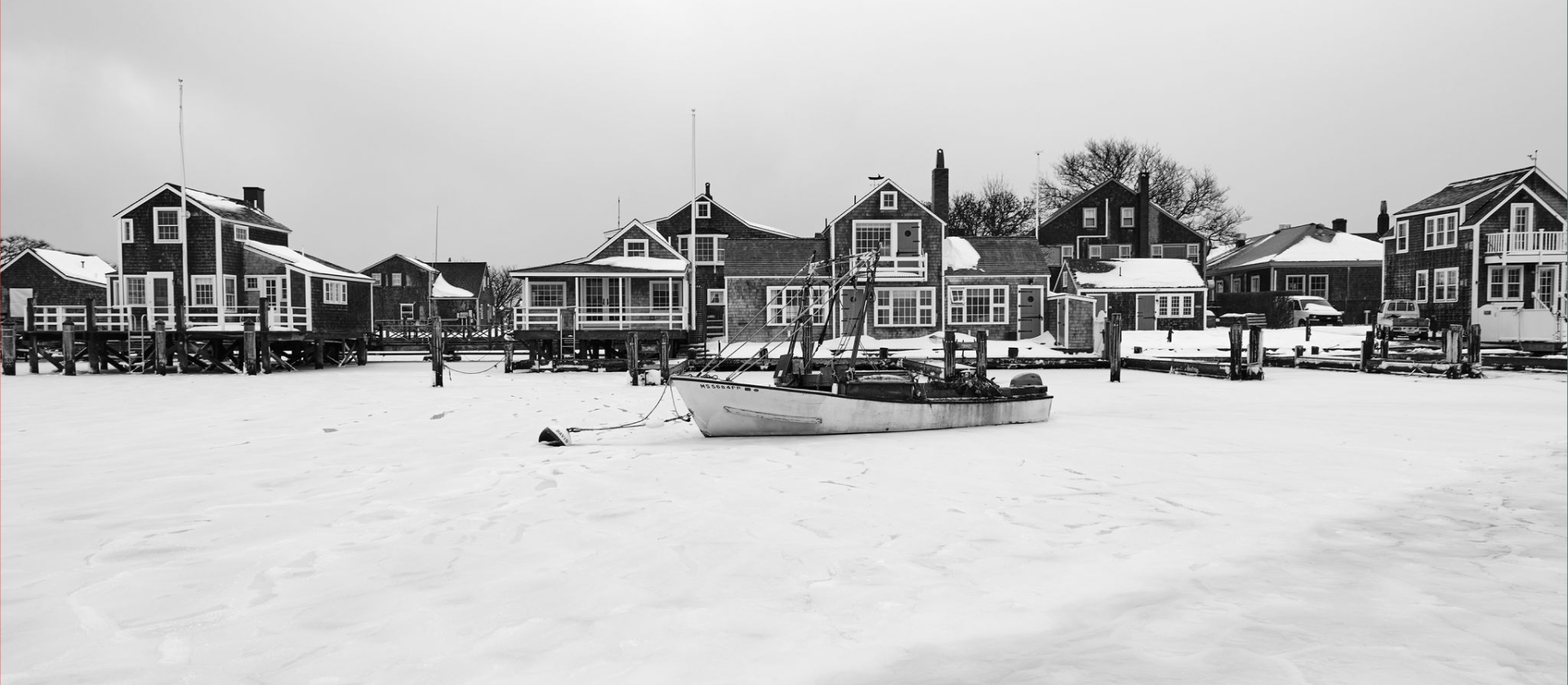
The Island in the off-season is reminiscent of old Nantucket. The yachts are gone, the mooring field isempty, and the harbor is quiet. Peace on the water existsafter a tumultuous summer, marking a transition to aslower rhythm.Visitors who brave the docks during these quiet monthsare greeted by a fleet of small, salt-stained watercraftbobbing in the slips surrounding the Island. ExploringStraight Wharf from late October to late March offers a
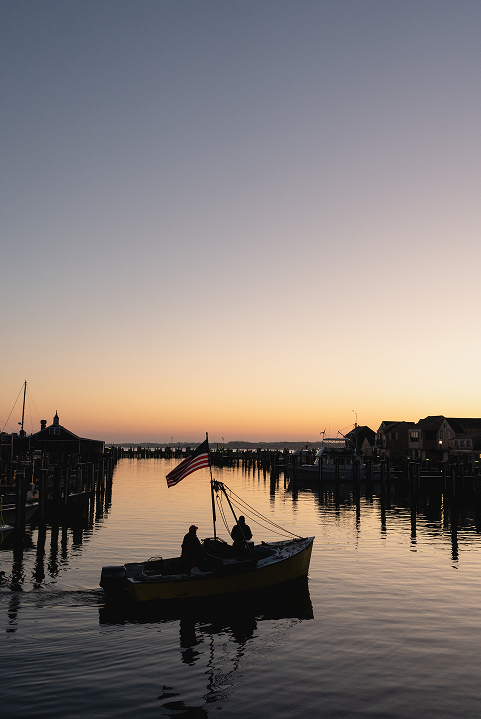
glimpse of a timeless Island tradition. And, like many of Nantucket’s most cherished traditions, a brief sighting might be all that’s possible.
These boats sit idle in the summer. They have an inverse relationship with the summer daydream that exists as most visitors’ vision of Nantucket. They are a counter point to the well-manicured boats of the busy season. In a harbor filled with fiberglass, polished lacquer, perfect upholstery, and sets of outboard engines that could buy a small home off-island, they do not belong.
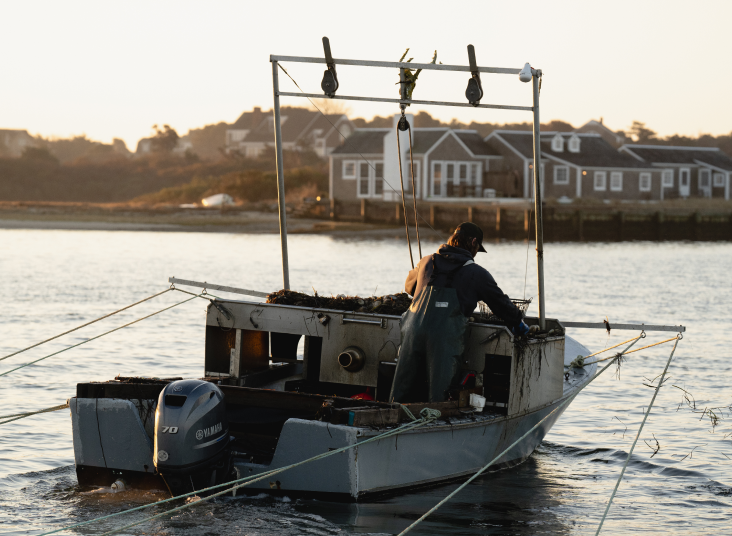
They are beasts of burden, with sides peppered by dents and scratches, and crudely mounted wooden culling tables bisecting the boat. They are built for a purpose, not for comfort. That driving purpose is an immediate reminder to off-season visitors that the Island does not shut down when Labor Day is crossed off the calendar.
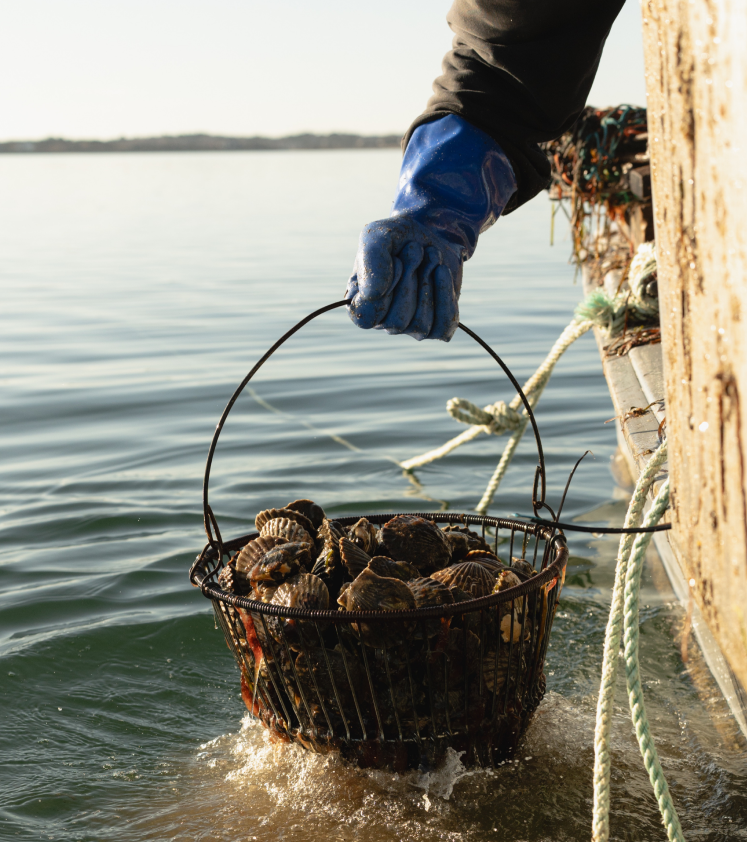
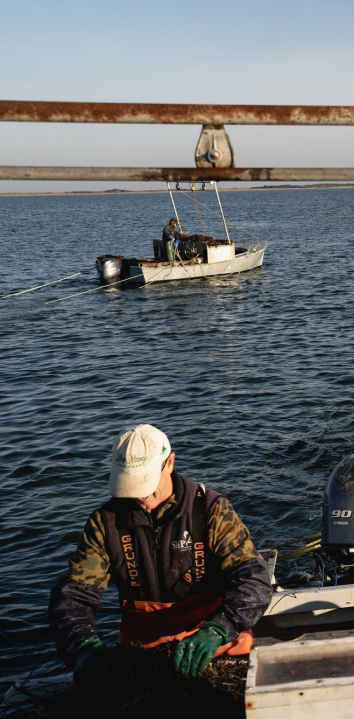
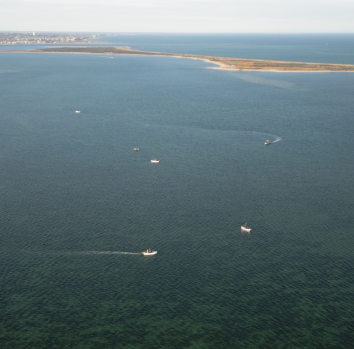
These boats belong to Nantucket’s bay scallopers, arare breed of Islander who venture out into the harbor in the winter months to toss dredges into the churning water under the blanket of the bitter North Atlantic air. They practice a trade that began over 150 years ago to supplement the Island’s lost income from a declining whaling economy.
The bay scallop has been an Island staple since history was first recorded. Once abundant in harbors up and down the East Coast, Nantucket now supports one of the only populations large enough for commercial harvest.
The bay scallopers hold the key to what might be the last vestige of Nantucket’s seafaring culture. In the summer, visitors fill the Island’s harbor and waterfronts, but there isa distinct feeling to the days when a scalloper can cast off to pull a paycheck from the sea while the wind blows cold.
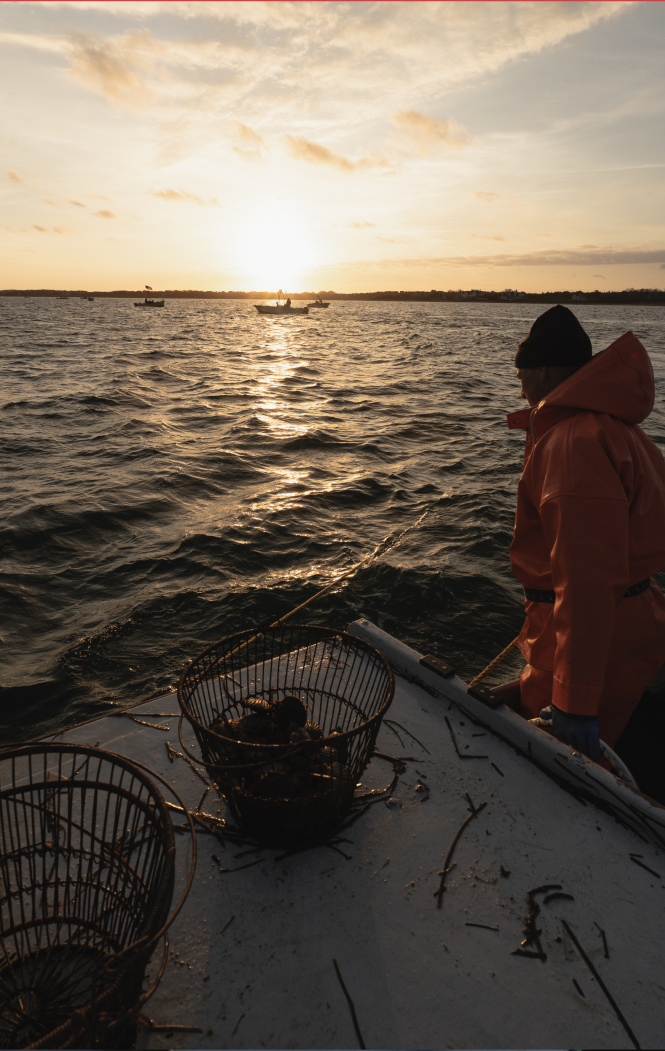
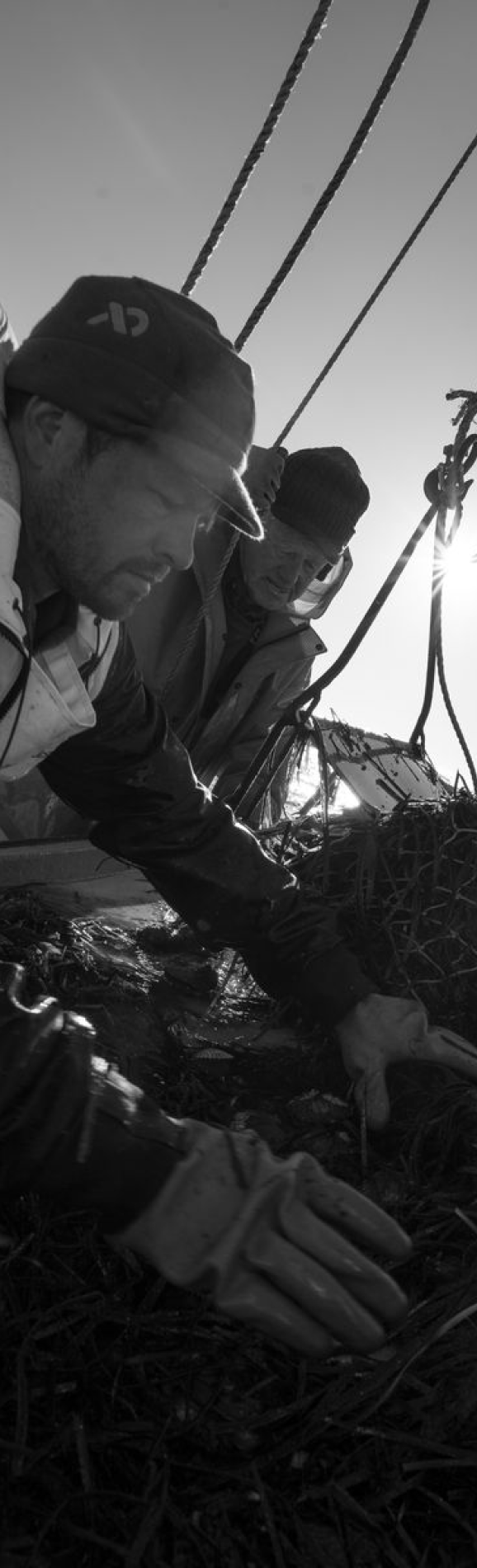
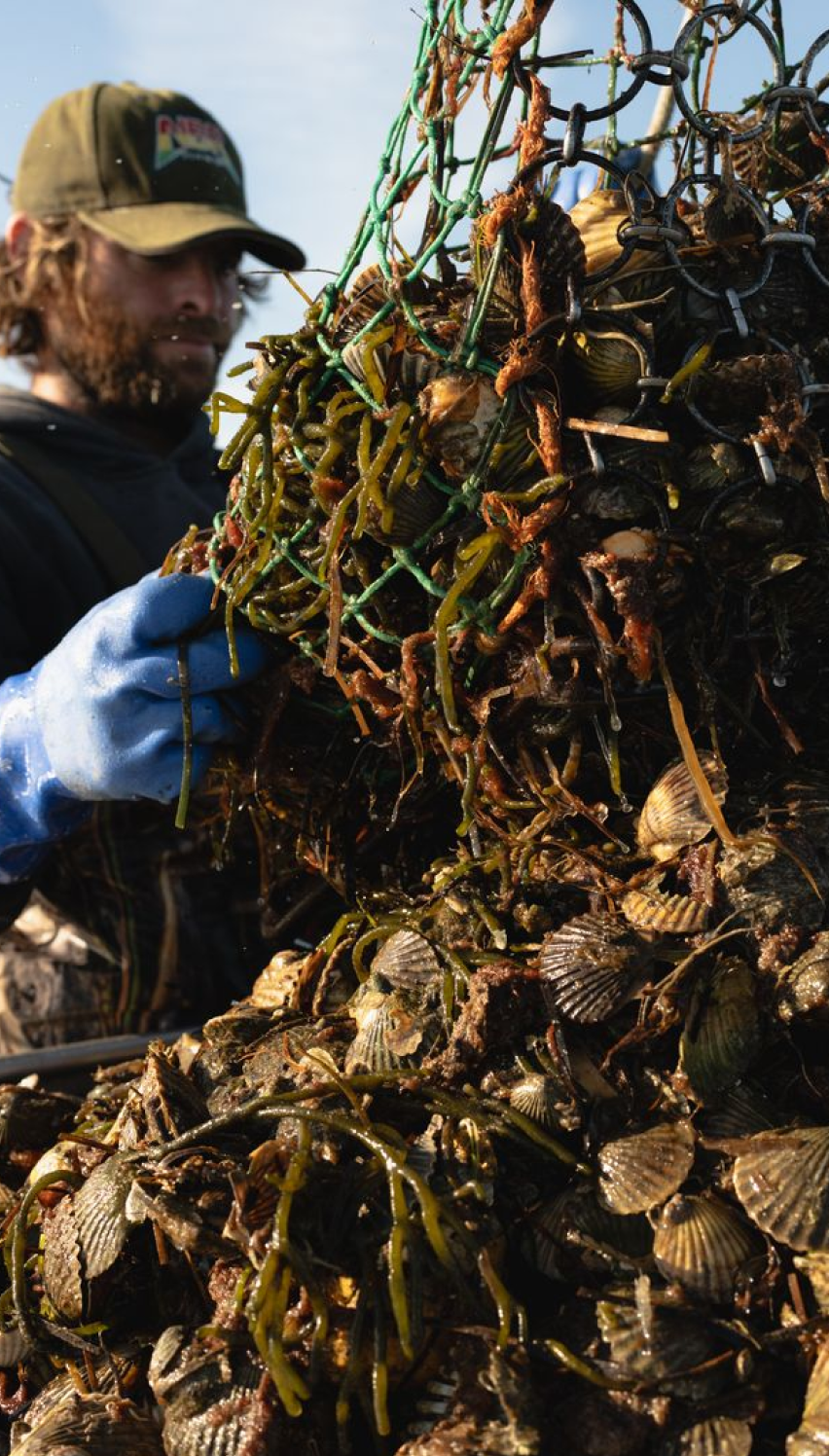
For most it is a solo venture, though a few still go out in pairs, one to haul the dredges, the other to sort through the piles of scallops, sand, eelgrass, and other various seafloor gems
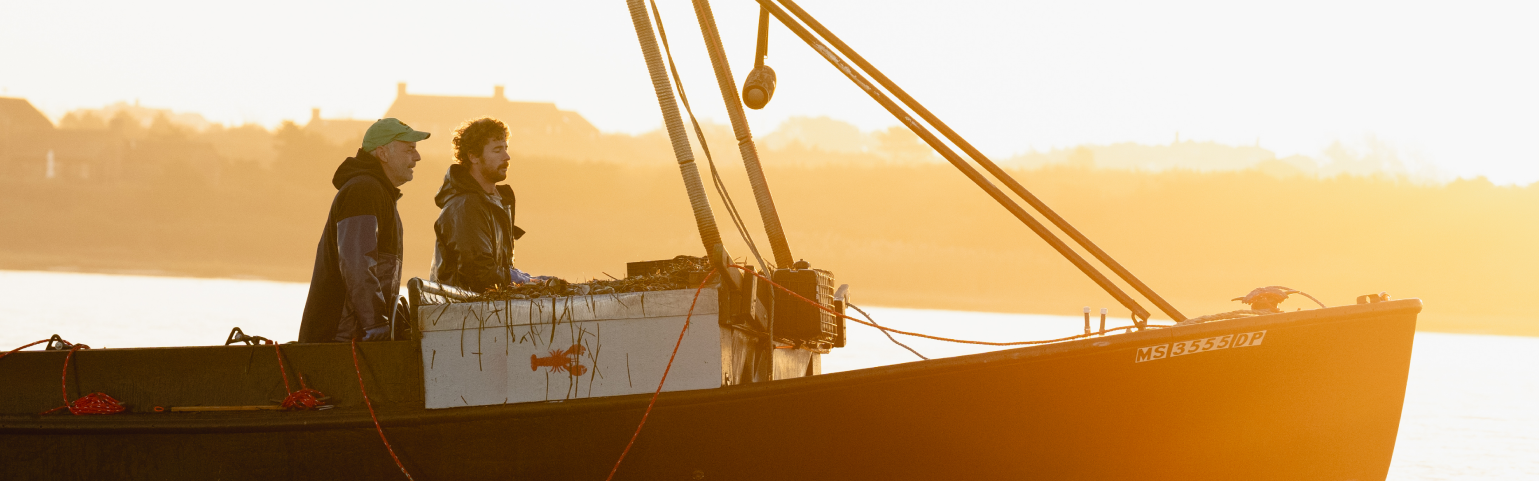

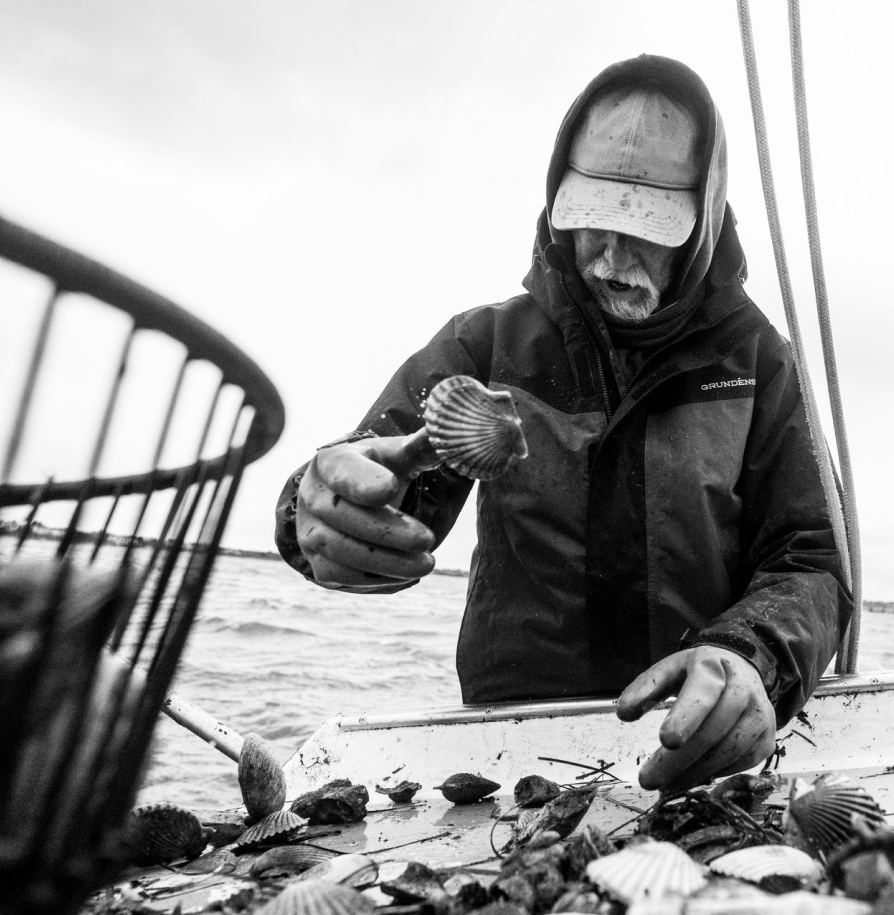
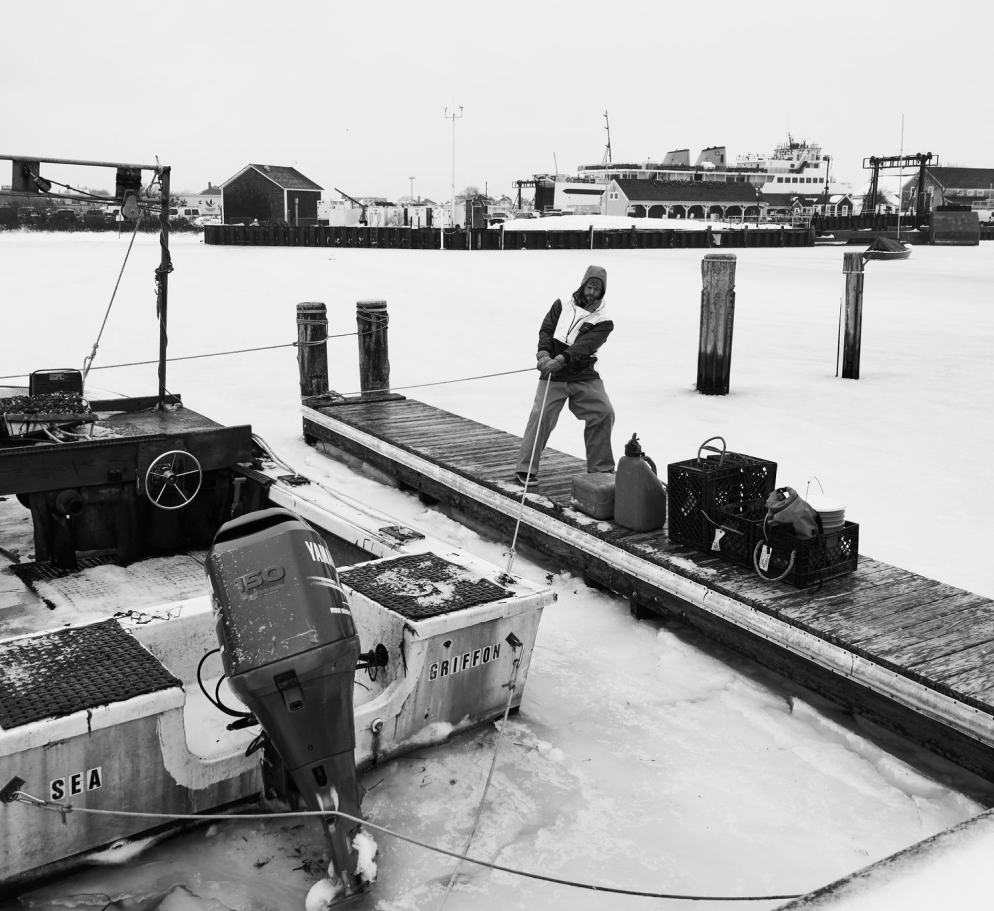

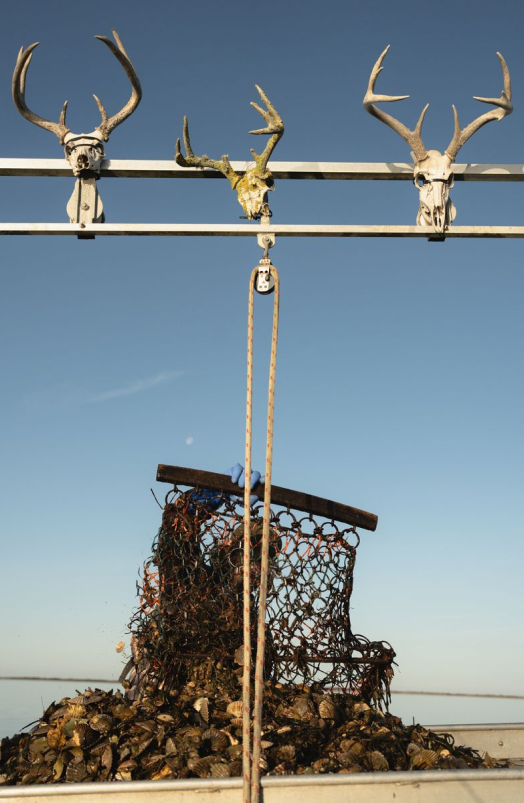
Scallopers use an engine-powered crank in the middle of the boat called a donkey. A rope is wrapped around the donkey, then through a pulley for extra leverage. The dredge is then hauled from the bottom and dumped onto the culling board. This system, refined over the years, began with hand-hauling, which is as rudimentary as it sounds. In its original form ,the dredges were literally pulled from the seafloor hand overhand; a back-breaking task. This method has been out of practice for decades, leading to improvements in scallopers’ physical well-being.

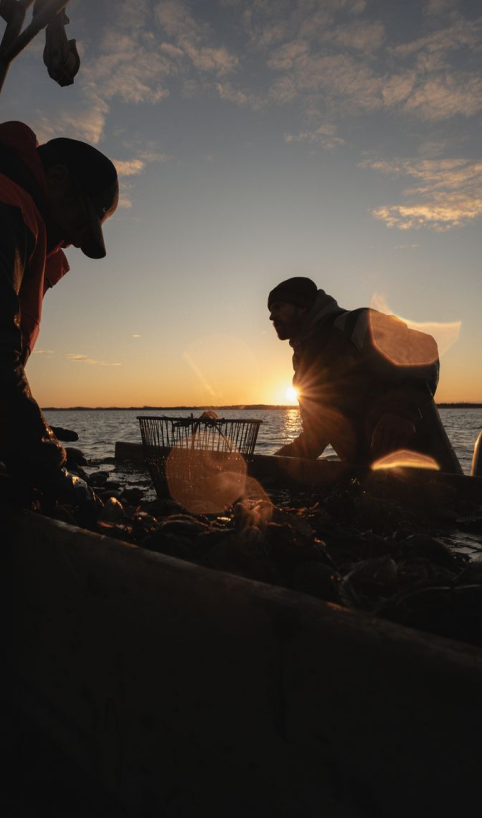
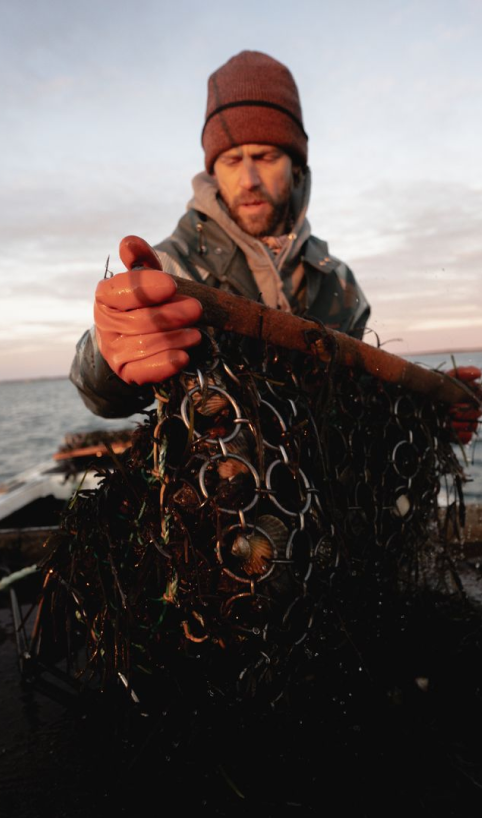
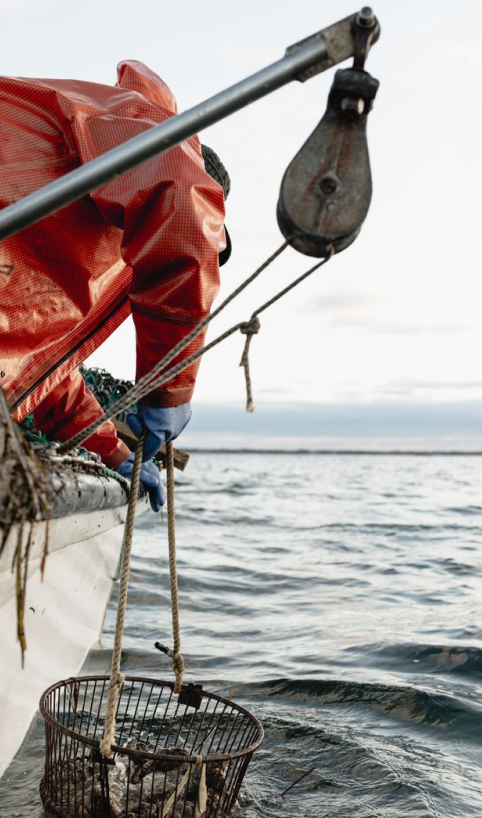
The dredges are thrown out a few ata time. The art of the tow separates the styles of individual scallopers. The location and duration of the trip and the pattern of navigation all vary depending on the operator and where they are fishing.
Some scallopers, like Bruce Cowan ,are known for the incredible efficiency of their tows. It is a staple of a trip
out scalloping to see someone lift their head early in the morning, while everyone else is hitting their stride ,and remark, “Yup, there goes Cowan, already done for the day.”
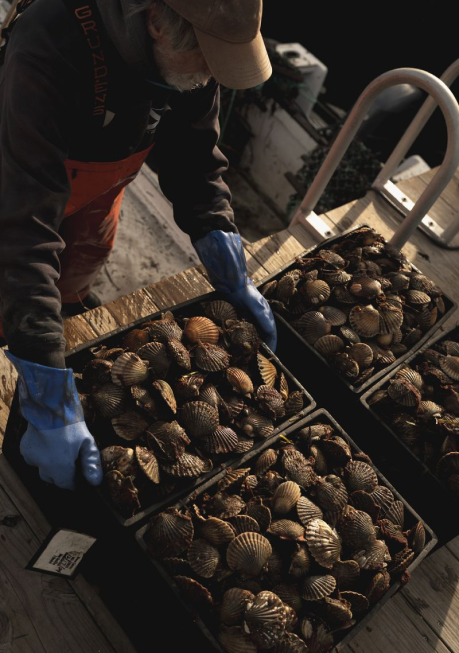
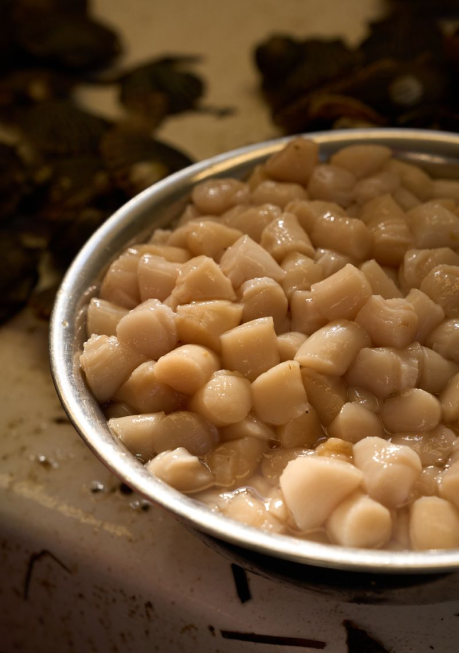
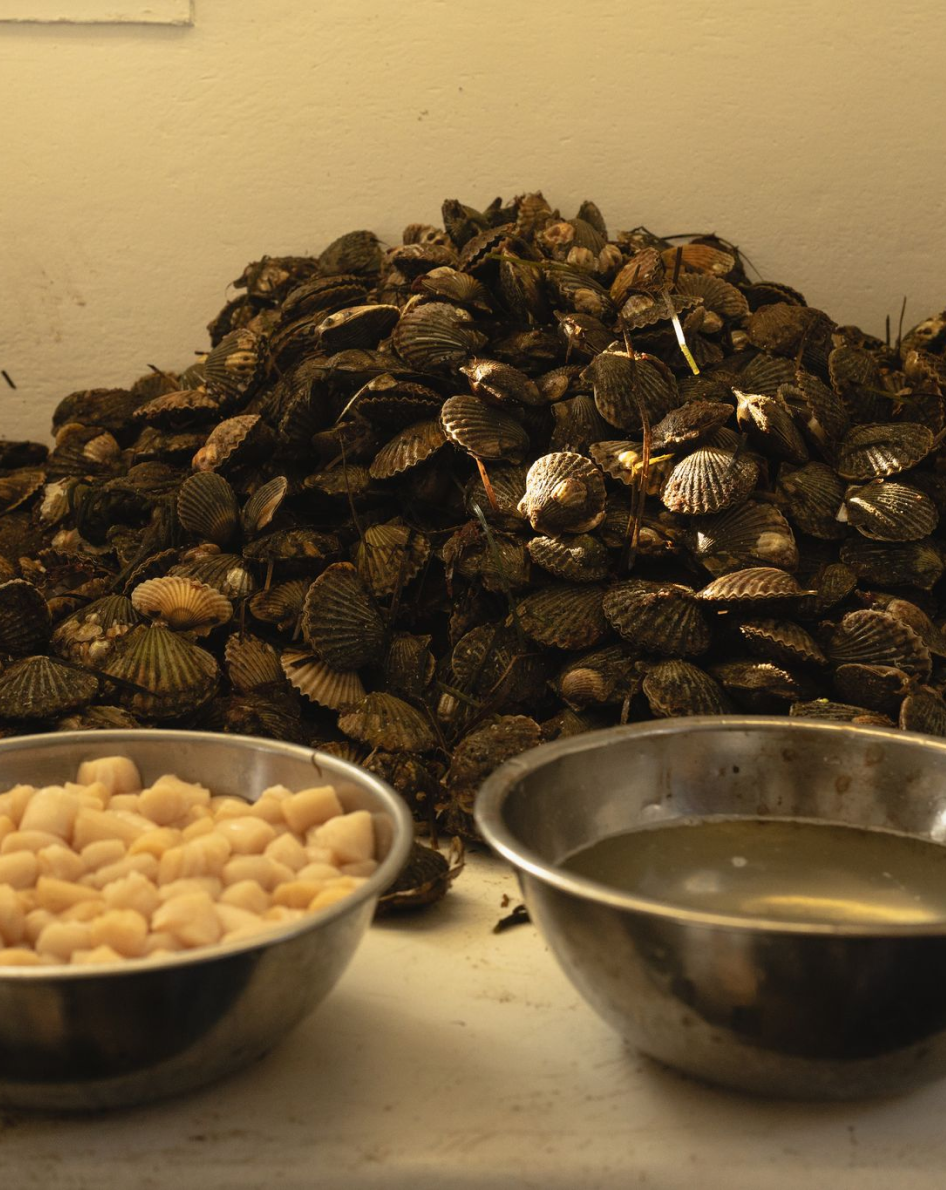
The catch itself is measured in boxes, boxes are filled throughout the dayand brought back to town. Shucking is not allowed on the boat itself; the catch must hit the docks first to be


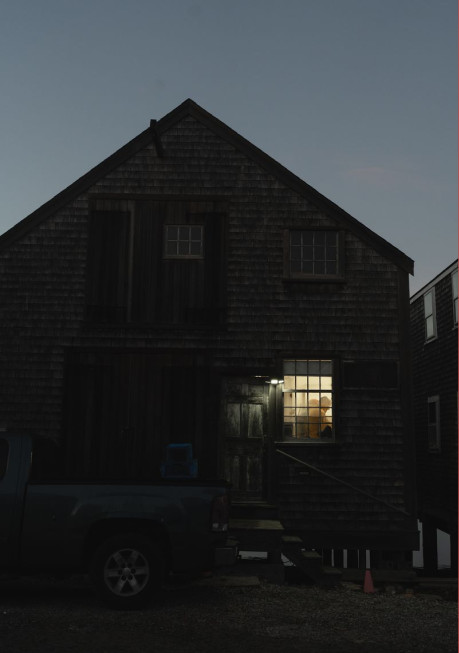
monitored, then it is brought to one of the Island’s few remaining shucking shanties. A true Nantucket staple, these shanties are where fishermen or hired openers spend the next few hours stripping the prized eye of the scallop with break neck speed and skill. Rarely is time wasted, for it truly transla test o money. The shucking shanties each have their own character ,as distinct and varied as the individuals who use them.
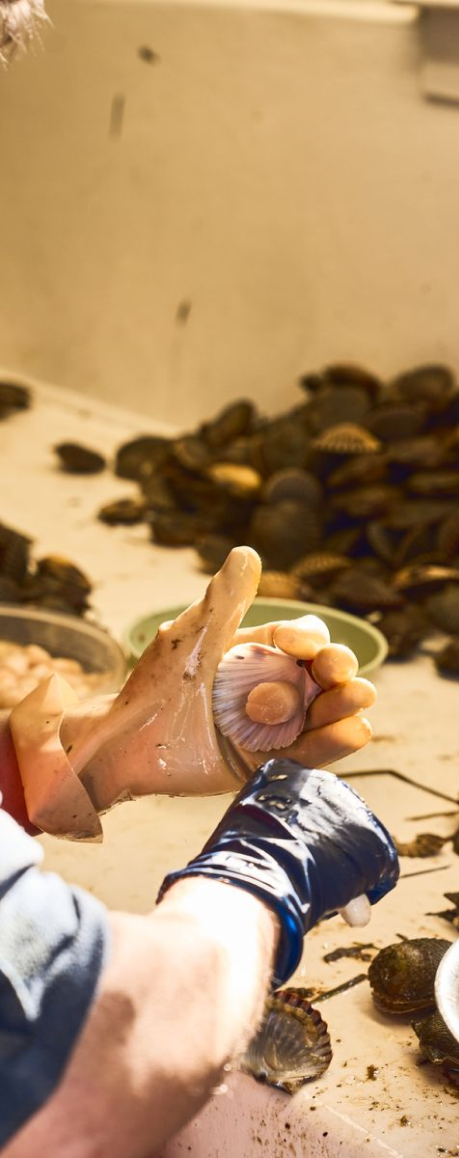
They are places of camaraderie, stories, debates about local news, and updates about family and friends. Multiple cultures and generations are represented in each one.
The shucking shanty is a gift to witness beyond its links to the past. It ignores all the modern trends of today’s working world: sterile offices, crowded commutes, complex communication, virtual meetings, and AI. Some jobs cannot be side-stepped by technology or data systems. Sometimes, you just have to stand and shuck.
Whether old guard or new generation, the bay scallopers keep their tradition intact. They endure when other Nantucket traditions fade from fashion or feasibility on an ever-changing Island. It may be partly due to seasonal demands, as scalloping is a second job for most who earn the bulk of their income during the busy summer. But for those who know how deep the tradition runs, there is a special pride that comes from working the same water ways with the same fierce grit as generations before them.
Today’s fleet of 40 to 50 boats is a fraction of the 250 it once was, when husbands and wives, fathers and sons ,neighbors alike turned out in heavy rubber slicks before the first pinks of sunrise in search of scallops. It takes a certain type of person to pull on a second pair of socks, head to the waterfront, and point a bow into the February wind before dawn. The grit of Nantucket’s people has long been told through the stories of whalers at sea for

years and the women who ran the town in their absence.
Those days are gone, but the grit is not. Salt on the bow and wind in your face are not relics of the past. The working waterfront of winter is as important for tradition as it is for the livelihood it provides to the residents who make up the Island’s backbone.
Support for the fleet can come in many forms, but words alone cannot fill a fridge or pay a gas bill. Nantucket’s stewards of salt are best supported by showing up, and by visiting local seafood markets long after the holiday rush fades.
It is a true taste of Nantucket, one that keeps visitors and residents content r when the bay scallopers’ fleet is finally docked along Straight Wharf for the summer.